

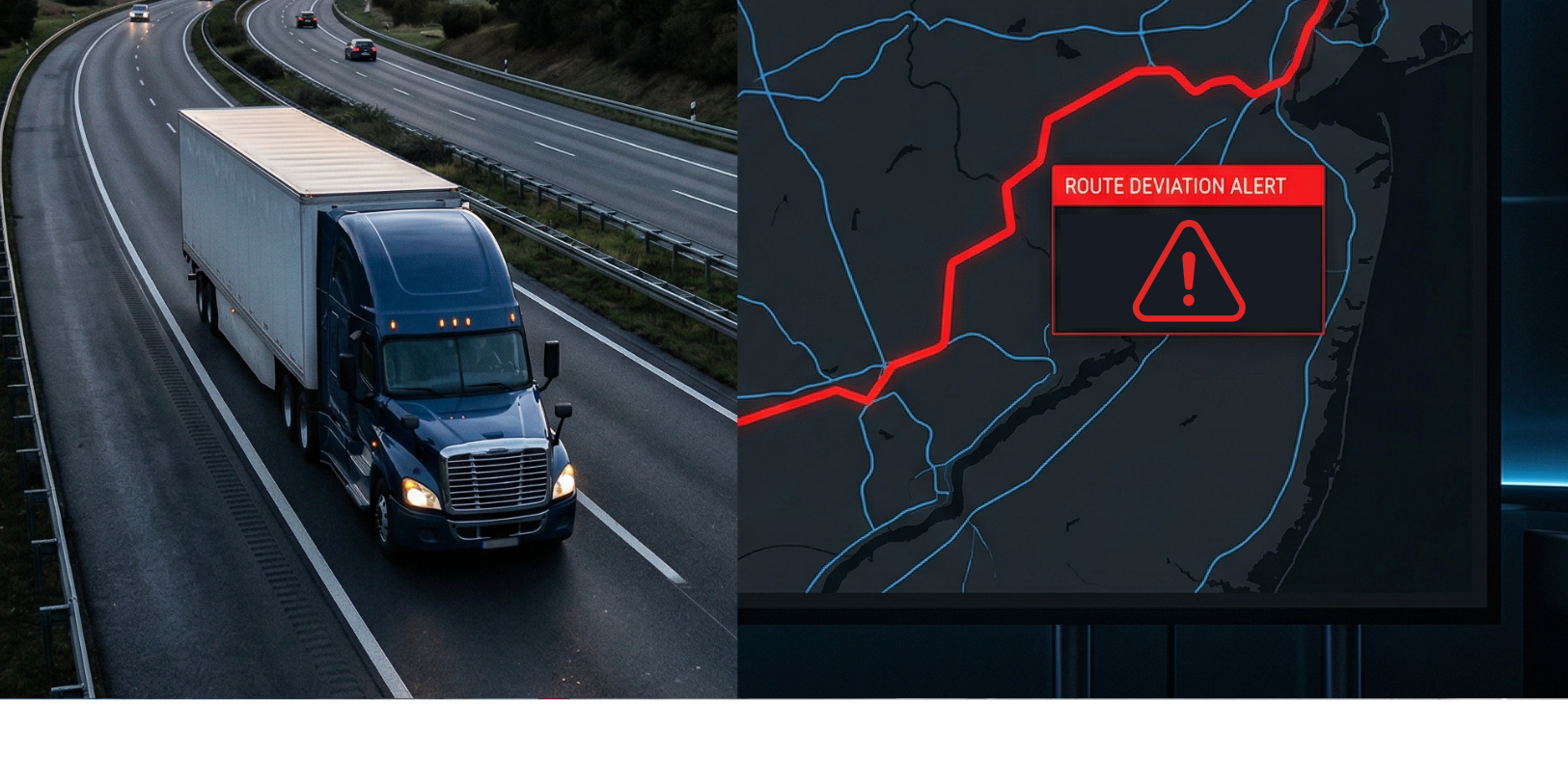
When Monitoring Becomes White Noise
For years, the security conversation around high-value freight has centered on visibility.
Where is the shipment?
Has it stopped?
Did it leave the route?
Did it enter a hot zone?
Did the device ping outside the expected location?
Those are important questions. But for many fleet security teams and supply chain manufacturers, the bigger challenge is no longer whether they can see the shipment.
It is whether they can trust what the monitoring system is telling them.
Because when every movement creates an alert, every alert starts to feel the same.
And that is where monitoring becomes white noise.
The real problem is not lack of data
Large fleets and manufacturers are not short on data. They often have more visibility than ever before. GPS pings, geofences, route alerts, door alerts, temperature alerts, stop alerts, yard alerts, carrier updates, driver check-ins, and customer-specific notifications may all be feeding into the same operating environment.
On paper, that sounds like control.
In practice, it can become overwhelming.
A shipment may trigger a diversion alert because air freight routing changed as part of normal operations. A container may look like it has moved unexpectedly because it is going through customs inspection. Rail or yard movement may appear suspicious to a system even when it is part of the standard transportation process. A driver may stop in a known hot zone because a mandatory rest break is required. GPS coordinates may ping slightly outside a warehouse geofence, even though the truck is exactly where it should be.
None of those examples are necessarily security events.
But when a system treats them like they are, security teams are forced to spend time sorting through noise instead of focusing on risk.
Alert fatigue creates operational risk
Alert fatigue is often talked about like an inconvenience. It is more than that.
It creates risk.
When teams are repeatedly asked to respond to alerts that turn out to be normal business activity, several things happen. Internal teams become overloaded. Carrier partners become frustrated. GSOCs spend time chasing low-value notifications. After-hours escalations increase. Trust in the system begins to erode.
Most importantly, real threats can get buried.
That is the part that should concern every security director.
A false alarm does not just waste a few minutes. It trains people to hesitate. It makes the next alert easier to dismiss. It creates a dangerous pattern where teams start asking, “Is this actually important?” instead of immediately understanding what needs attention.
Some monitoring programs try to solve alert fatigue by turning down the sensitivity. Others remove certain alert types altogether. That may reduce noise, but it can also create blind spots.
The better answer is not to monitor less.
It is to monitor smarter.
As Jon Douthit, Senior Account Executive at Vectura Risk Management, noted after a recent prospect conversation:
“The issue is not that security teams lack information. It is that too much of the information being escalated is not actually meaningful. When normal freight activity creates the same level of urgency as real risk, the system starts to overwhelm the people it was designed to support.”
That is the heart of the problem.
More data does not automatically create better protection. Better judgment does.
Normal freight movement should not look like a crisis
Transportation is dynamic. Routes change. Drivers stop. Inspections happen. Yards move equipment. Rail delays occur. Warehouses have imperfect geofences. Weather, traffic, regulations, and facility procedures all affect what happens in transit.
A monitoring model that does not understand those realities will continue to create unnecessary noise.
For fleet security directors, that creates a difficult position. You need to protect the freight, support the driver, keep the customer informed, and avoid overwhelming the operation. But if your monitoring process treats normal movement as suspicious movement, your team ends up managing alerts instead of managing risk.
That is not sustainable.
It also does not build confidence with carrier partners.
When carriers are repeatedly contacted over movements that are explainable, expected, or operationally necessary, the monitoring process begins to feel disruptive. Over time, that can weaken cooperation, slow response, and make true escalation harder.
The best monitoring knows when not to escalate
Strong monitoring is not measured by the number of alerts generated.
It is measured by the quality of what gets escalated.
A mature monitoring program should be able to identify when a route change is expected, when a stop is explainable, when a geofence issue is likely technical, and when yard movement is normal. It should also know when something does not fit the shipment profile, lane risk, driver behavior, customer requirements, or escalation protocol.
That requires more than software.
It requires people who understand freight.
It requires operational context, defined SOPs, active review, and the discipline to separate normal activity from meaningful risk. It also requires a response model for the alerts that do matter.
Because an alert by itself does not protect freight. What matters is what happens next.
From visibility to confidence
Security directors do not need more noise. They need confidence that when an alert reaches their team, it matters.
That is where the freight security conversation is moving.
Visibility still matters, but visibility without context can overwhelm the operation. The next level of in-transit protection is not about creating more alerts. It is about reducing the wrong ones, validating the important ones, and making sure real risk gets attention before it becomes a loss.
For large fleets and supply chain manufacturers, that distinction matters.
A monitoring program should not burn out your team. It should support them.
It should not frustrate your carrier partners. It should help align them.
It should not bury real threats under routine movement. It should make real threats easier to see.
When monitoring becomes white noise, the answer is not more alerts.
It is better intelligence, better escalation, and a team that understands the difference between movement and risk.